
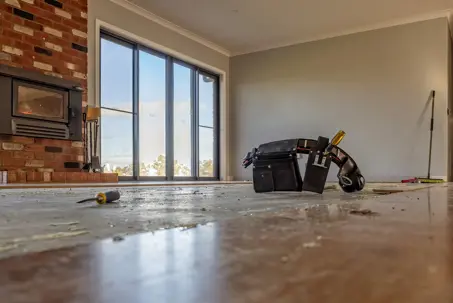
Replacing flooring is one of the most common renovation projects homeowners take on. Once you've chosen a new flooring material, the next big decision is whether the existing floor needs to come out first.
At first glance, installing new flooring over what's already there seems like an easy way to save time, reduce labor costs, and move the project along faster. In some situations, it can be a practical option. In others, it creates problems that don't show up until months—or even years—after the new floor is installed.
The challenge is knowing the difference.
A floor that appears perfectly fine on the surface may be hiding moisture issues, damaged subfloors, multiple flooring layers, or uneven areas that can affect the performance and lifespan of whatever goes on top. Before deciding whether to remove an existing floor or install over it, it helps to understand when an overlay makes sense and when removal is the smarter choice.
When Installing Over Existing Flooring May Be an Option
There are situations where keeping the existing flooring in place is a reasonable approach.
Generally, an overlay may work when the current floor is:
- Structurally sound
- Firmly attached to the surface below
- Free of moisture damage
- Relatively flat and level
- Limited to a single flooring layer
- Compatible with the new flooring product being installed
For example, some luxury vinyl flooring products can be installed over certain tile or sheet vinyl surfaces when the existing floor is in good condition, and the manufacturer allows it.
The important thing to remember is that the old floor becomes the foundation for the new one. If that foundation isn't stable, problems often find their way into the finished floor sooner or later.
Just because a floor can be covered doesn't automatically mean it should be.
Why Floating Floors Rarely Belong on Top of Floating Floors
One of the most common mistakes in flooring renovations is installing one floating floor directly over another.
Floating floors are designed to rest on a stable surface without being permanently attached. When two floating systems are stacked together, both layers can shift independently as people walk across them.
That movement often causes:
- Squeaking
- Joint separation
- Soft spots
- Uneven wear patterns
- Premature flooring failure
The installation may look great on day one, but over time, the movement underneath can shorten the life of the new floor significantly.
In most cases, removing the original floating floor creates a much stronger base for the replacement.
Signs Your Existing Flooring Should Be Removed
Some situations make the decision fairly straightforward.
If any of the following conditions are present, removal is often the better long-term solution.
Visible Damage
Cracked tile, buckled flooring, loose planks, water stains, soft spots, and uneven areas are all warning signs that something may be happening beneath the surface.
Installing over damaged flooring doesn't solve the problem. It simply covers it up.
Previous Water Issues
Bathrooms, kitchens, laundry rooms, and entryways frequently experience moisture-related problems.
Even if the visible flooring appears intact, water may have affected the subfloor underneath. Removing the flooring allows those areas to be inspected properly before a new installation begins.
Multiple Flooring Layers
Many older homes contain several generations of flooring stacked on top of each other.
Each additional layer increases the chance of movement, uneven transitions, and installation complications. It can also create issues with certain flooring manufacturers' installation requirements.
Carpet Under Hard Flooring
Carpet and padding should always be removed before installing hard-surface flooring.
Because carpet compresses under weight, it doesn't provide the stable support needed for products like luxury vinyl plank, laminate, tile, or hardwood flooring.
Height and Clearance Problems
Even thin flooring materials add height.
That extra height can affect:
- Door swing clearance
- Appliance fit
- Stair transitions
- Baseboards and trim
- Flooring transitions between rooms
If clearances are already tight, removing the old floor can prevent additional modifications later.
Why Moisture Matters More in Florida Homes
Moisture is one of the biggest reasons flooring systems fail.
Here in the Tampa Bay area, humidity isn't just a summer issue. Homes experience elevated moisture levels throughout much of the year, and concrete slabs continuously release moisture vapor from below.
When a new floor is installed over an existing one, moisture can become trapped between layers.
Over time, that may contribute to:
- Adhesive failure
- Flooring movement
- Mold growth
- Cupping or warping
- Surface deterioration
The difficult part is that these issues often remain hidden until significant damage has already occurred.
Removing the existing flooring provides access to the concrete slab or subfloor, allowing moisture testing and inspections to be performed before the new floor goes in. That information can make a major difference in how well the finished installation performs over time.
For many Tampa Bay homeowners, moisture concerns alone are enough reason to carefully evaluate whether an overlay is worth the risk.
Older Homes May Require Additional Consideration
The age of a home can also influence whether flooring should be removed.
Certain flooring products installed decades ago may require special handling if demolition becomes necessary. In some cases, older materials may need to be evaluated before renovation work begins.
Homeowners don't need to become experts in flooring materials themselves, but understanding when the floor was installed and discussing any concerns with qualified professionals before demolition starts can help avoid unexpected delays once the project is underway.
What Proper Floor Removal Really Accomplishes
Many people think floor removal is simply about getting rid of old material.
In reality, it's also about creating the best possible surface for whatever comes next.
Removing the existing flooring gives contractors an opportunity to identify and address problems before they affect the new installation.
Depending on the project, that may involve:
- Removing old adhesives and residue
- Eliminating high spots and uneven areas
- Inspecting the condition of the subfloor
- Identifying moisture concerns
- Grinding concrete surfaces
- Preparing the substrate for new flooring
This preparation work often determines whether a new floor performs well for decades or develops issues much sooner than expected.
The cleaner and more stable the surface underneath, the better the finished result is likely to be.
Think Beyond Installation Day
A newly installed floor usually looks great at first.
The bigger question is how it will perform three, five, or ten years from now.
If the existing floor is stable, dry, level, and compatible with the new product, installing over it may be a perfectly reasonable option. But when there are signs of moisture damage, multiple flooring layers, uneven surfaces, or structural concerns, removal often provides the stronger long-term solution.
The goal isn't simply getting new flooring installed.
The goal is to create a foundation that supports the flooring for years to come.
Taking the time to evaluate what's underneath today can help prevent expensive repairs, premature wear, and unexpected problems later.
Before You Invest in New Flooring, Start With the Surface Beneath It
A beautiful new floor can only perform as well as the surface underneath it.
If hidden moisture, old adhesive, multiple flooring layers, or subfloor damage are left in place, even high-quality flooring products can develop problems long before they should. That's why experienced contractors know that proper removal and preparation aren't optional—they're part of doing the job right.
Whether you're remodeling a home, updating a commercial property, or preparing a space for new flooring, starting with a clean, stable surface helps avoid delays, unexpected repairs, and costly do-overs later.
Bottom Zupp has specialized in floor removal and surface preparation throughout the Greater Tampa Bay area since 2009. From tile removal and carpet removal to wood floor removal, concrete grinding, and selective demolition, we help homeowners, contractors, and property managers create the right foundation for what's next.
Before you commit to a new flooring installation, make sure the surface underneath is ready for it. To schedule an estimate, call (904) 644-3295 or fill out our online contact form.